
The last place we look
On grip, and the one thing you can’t see from the inside
When a team starts to grind, we go looking for the reason. It’s a good instinct. Something is wrong, and finding out what is part of the job.
So we look at the people first.
Are they the right people, the right mix?
If the people check out, we look at process, then workload. Any of it could be true. Often it’s a combination of the lot, and a capable leader can build a convincing case for each.
But notice the direction of the search. Often the first line of enquiry starts with the leader and points out. Looking everywhere except the place the looking should start, in the mirror.
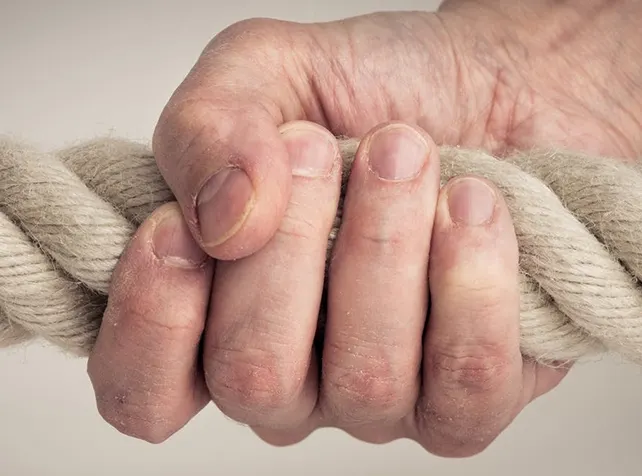
Last issue I said your hands already know how to read grip. You do it all day without thinking. A golfer feels the club through their fingers and adjusts before the swing. You pick up a wine glass by the stem and find exactly enough pressure, no more. Everywhere else in life, grip is something you read and change in real time. Then you walk into work and it locks, as though someone has set it in a vice.
I left you with one question. Were you reading it, or just squeezing?
Why you can’t answer that
Most of us can’t answer it honestly, and not because we’re avoiding it. We can’t see our own grip from the inside.
Grip doesn’t feel like a choice. It feels like the way things are. You don’t notice the smell of your own house, only other people’s. It’s the same here. Your grip is the temperature of the room, and you’ve been in the room so long you’ve stopped feeling it.
There’s a second problem, and it’s the one that keeps leaders stuck. The team adapts to your grip. People learn what you’ll rewrite, so they stop polishing it. They learn which ideas you’ll pick apart, so they stop raising them. They learn that you’ll make the call anyway, so they wait for you to make it.
From where you sit, all of that looks like evidence about them. They’re not proactive. They don’t think strategically. They need more direction. So you hold a little tighter, and the pattern gets a little stronger. The grip produces the behaviour that seems to justify the grip.
That’s why it stays unnoticed. And while it does, we keep fixing what we can see. A restructure. A new process. A capability program for the team. None of these are wrong in themselves. They’re just aimed at the symptoms, and some of them quietly add more grip.
The moment you see it
Then something happens. It’s usually small.
A comment in a 1:1 lands a bit too close. You catch yourself rewriting a proposal that was fine, and you can’t say what was wrong with it. Or you’re preparing for a planning session and realise your most capable person hasn’t brought you a new idea in months.
For a second you see it. The grind has your fingerprints on it.
That second matters more than anything that comes after it. It’s also uncomfortable, for a simple reason. Up to that point the grind was circumstance. A tough market. A wrong hire. Bad luck with timing. Things that happened to you.
After it, the grind is a choice.
No neutral ground
Once you’ve seen it, there’s no neutral ground left. You can change how you’re holding things, or you can keep holding them the same way. Both are decisions.
Only one of them feels like one.
Changing your grip feels like a decision because it’s effortful and visible. You have to do something different, and people will notice. Keeping your grip doesn’t feel like a decision at all. It feels like continuity. Like doing your job. Like being responsible. That’s exactly what makes it the riskier option. It lets you choose without ever feeling the weight of choosing.
The team will know which one you picked. Not from anything you say. Teams read a leader’s grip far more accurately than the leader does, because they’re on the receiving end of it. They’ll feel it in the meeting where the discussion goes quiet as soon as you’ve spoken. In the idea nobody bothers raising. In the Friday that feels like a Monday.
“I didn’t know” is a fair thing to say.
Once.
This isn’t about becoming someone else
None of this is a character flaw. Most leaders stuck in the grind aren’t careless. They’re conscientious. The grip usually comes from caring about the outcome, and in most cases it was the right grip once. The new team needed it. The risky project needed it. The person in their first big role needed it.
The problem isn’t that you held on. It’s that the thing changed and the hold didn’t.
So the fix isn’t a personality transplant or a new leadership style. It’s reading again. This person, this decision, this week. The same skill your hands use everywhere else, brought back into the one place it went missing.
Which makes the honest question smaller and harder than “am I a good leader?”
It’s this.
Where am I holding something the same way I held it a year ago, when it’s no longer the same thing?
It might be a person who has grown past the level of oversight you gave them. A project that has moved out of its risky phase but still runs through you. A decision you still sign off that someone else is ready to own.
You probably know the answer already. Most people do, the moment they’re asked. Knowing isn’t the hard part.
Doing the thing that changes it, is.
And that one thing is harder than it looks, for a reason that has nothing to do with skill.
That’s next issue.